
WHALE SHARKS
South Ari Atoll
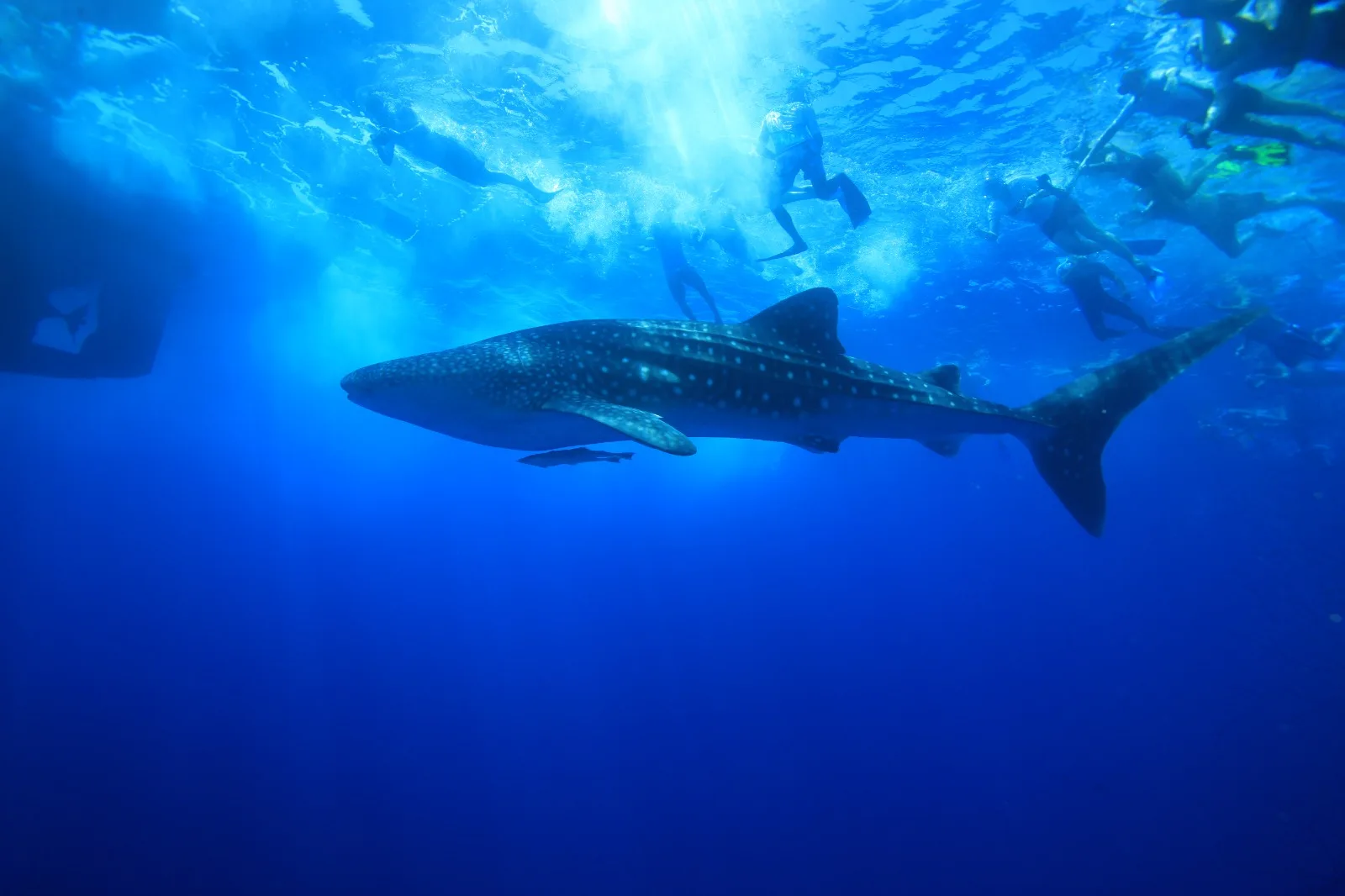
The one stretch of Maldivian reef where whale sharks are resident rather than seasonal.
The outer reef between Dhigurah and Maamigili is a protected marine area and the only place in the archipelago where whale sharks are seen throughout the year. Mornings are given to the search — slow, patient, with the crew reading the water — and afternoons to the sandbanks and drop-offs that make South Ari worth the passage even without a sighting. Dhigurah's three-kilometre spit of sand is the finest walk in the central Maldives.
What the atoll is known for
- Whale sharks
- Manta points
- Long lagoons
- Remote islands
Anchorages, reefs and islands
Kudarah Thila
diving
A pinnacle dive of considerable reputation.
Omadhoo
island
A small, tidy village few visitors reach.
Whale Shark Zone
whale shark
Protected outer reef, resident whale sharks.
Maamigili
airport
Domestic airport and whale-shark gateway.
Dhigurah
island
Three kilometres of sand and shade.
Continue
Atolls that pair well with this one
HOME WATERS
North Malé Atoll
The natural opening chapter of an Atoll Villa journey — coral gardens, sandbanks and surf within an easy first afternoon of the airport.…
Read the guideREEFS & FISHING
South Malé Atoll
Quiet channels, generous reefs and the kind of evening fishing that ends with the catch on the grill.…
Read the guideNIGHT MARINE LIFE
Vaavu Atoll
After dark the reef changes character — Vaavu is the atoll for those who want the ocean at its most alive.…
Read the guide
Questions
Planning this atoll
Which atolls can Atoll Villa reach?+
From Hulhumalé we routinely cruise North and South Malé, Vaavu, Ari, Baa, Lhaviyani and Raa, and longer charters can push further north or south. Distances are covered overnight wherever possible, so the hours you are awake are spent at anchor rather than under way.
When is the best time of year to sail?+
The dry northeast monsoon, roughly December to April, brings the calmest water and the clearest visibility, and suits first-time visitors and photographers. The southwest monsoon, May to November, is greener and livelier, with short warm rain and the plankton blooms that bring mantas into Hanifaru Bay. Neither season is a compromise; they simply reward different intentions.
Can we visit local islands as well as reefs?+
Yes, and we encourage it. Fishing villages, coral-stone mosques, boat-building yards and small markets give a charter its sense of place. Visits are arranged respectfully with a Maldivian guide, at times of day that suit the community as much as the itinerary, and modest dress is asked for ashore.
Is the route fixed before we sail?+
A proposed route is agreed before departure so you know the shape of the week, but the captain adjusts it daily against wind, swell and marine-life reports. That flexibility is the single greatest advantage of travelling by yacht here — you are never committed to one island's weather.